|
Since 2008, our customers have created over a thousand jobs
through improved paint finishing, opened new facilities, expanded existing
ones, and brought hundreds of millions in production
to the USA.
Improved paint finishing operations have added greater
than a billion dollar value to their businesses. The average
NAPaint project ROI is less than 5 months. Annual
benefit can exceed tens of millions. |
|
Reducing
Paint Overspray
Overspray
refers to that portion of sprayed paint that does not land on the
target. It does not benefit the painting process in any
way. On the contrary, in the amount of wasted material,
increased filter loading, affect on booth uncleanliness, and by
the higher levels of emissions, overspray is a substantial burden
on paint processes and it pays to minimize it. Moreover,
paint overspray that settles onto painted parts can seriously
degrade the quality of the finished product, reducing gloss and
contributing to orange peel. If your
application has excessive overspray from electrostatic or
conventional spray guns, bells, disks, or other rotary atomizers,
operator
and maintenance personnel alike may find the discussion below
useful for reducing levels of overspray and management may deem these
discussions an aid in the decision making process.
North
American Paint Applications is the world leader in the implementation
of technology and process control for the reduction of overspray in every type of paint application.
Calculate
Cost of Waste
It
is easy to determine the volume of material sprayed by an
applicator that is overspray. First, calculate the amount of
paint that lands on the target part. Second, subtract that
amount from the total sprayed paint.
Overspray
V = Total Volume of Sprayed Paint - Transfer Efficiency
X Total Volume of Sprayed Paint
Two
practical methods for calculating the paint
transfer
efficiency are shown at the bottom of this page. To
calculate the material cost of overspray, multiply the volume of
overspray material times the cost of the material.
Overspray
$ = Overspray V X Material Cost
This
calculation can be done on a per part basis or a time basis,
whichever is convenient.
Other
Costs of Paint Overspray
Filter
loading and sludge are created as a direct result of overspray. Increased levels of overspray require more
frequent filter changes and higher volumes of sludge
disposal. The filter loading, in particular, is troublesome
because not only does it create imbalances in the flow of air
through the booth, but filter loading generally acts to reduce the level of
booth air flow,
which can create significantly higher concentrations of booth
vapors, booth airborne particulate, and contamination.
Overspray
is a source of increased levels of dirt build-up in the
booth. As filters restrict the flow of exhaust air from the
booth, overspray lingers to create still higher levels of contamination in
and around the spray booth. This is particularly so with
electrostatic applications. In addition to creating the need
for more frequent maintenance, all this contamination can create a
major dirt problem, severely affecting the quality of the finished product.
Ecological
cost is a more abstract measurement, but not a less important
one. Minimizing the emissions of airborne solid and vapor
pollutants into the local community is the duty of every corporate
citizen. And in the case of paint overspray, responsible
manufacturing and efficiency are synonymous; efficient systems are
truly poorer polluters.
Causes
of Paint Overspray
Triggering
paint off the part or triggering when no part is present is a
common source of overspray. Improper head to target
distances are a cause of increased overspray as are improper
angles of application. Turbulent air flow conditions can
create overspray. Mechanical force such as the turn around
points of vertical or horizontal reciprocators can cause
consistent bursts of directional overspray. Insufficient
levels of electrostatic force contributes to large amounts of
overspray. NA Paint can implement technology and process
control to significantly reduce or eliminate overspray by all of the
above causes.
Excessive
atomization is another prevalent cause of overspray.
Creating tiny paint droplets, they can dry out in flight to the
target and get swept away by the flow of air. Often, spray
guns have their atomizing and pattern air volumes so high that
they are more efficient at fogging than painting.
Of
course, choosing the most efficient applicator for your
application can contribute to the reduction of overspray.
And, applying that applicator efficiently is very important.
For example, a 16 inch wide spray pattern is not necessary to
paint a 4 inch wide part. NA Paint can help you get your
process under control at peak efficiencies.
North
American Paint Applications is the world leader in the
implementation of methods for the reduction and elimination of
overspray.
Not only can we significantly reduce the amount of overspray, we
can implement technology that adjusts air flows under changing
filter load conditions to help maintain a constant flow of air
through the booth.
Paint
Transfer Efficiency
Transfer
efficiency refers to a ratio representing that portion of sprayed
paint that does land on the target part. This number is
widely used in calculations involving paint application
economics. It is common for manufacturers to advertise
transfer efficiency ratings for their applicators which do not
correspond with the actual efficiency that is obtainable in your
paint process. Because this is an important measure of
efficiency, two practical methods for calculating the actual
transfer efficiency of installed systems are shown below.
These methods are for single component material applications.
TE
by Weight
The
most accurate method of calculating transfer efficiency is by
weighing the part prior to painting and after painting. This
should be done when the part is completely dry. This method
will include in its result all film build variations, heavy edges,
and wrap (paint on the reverse surface).
Paint
Solids Weight on Part = Part Weight After Painting - Part Weight
Before Painting
This
yields the weight of the solids in the coating. Then, we
must determine the weight of the paint solids dispensed from the
applicator.
Paint
Solids Weight Dispensed = Weight of Dispensed Paint X Paint %
Solid Content by Weight
The
weight of the dispensed paint can be calculated by multiplying the
volume of the dispensed paint by its density.
Finally,
the transfer efficiency by the weight method can be found.
Transfer
Efficiency W = Paint Solids Weight on Part / Paint
Solids Weight Dispensed
TE
by Volume
If
it is impractical to weigh parts, a very accurate method of
calculating transfer efficiency is by measuring the volume of
solids on the part after painting and comparing that to the volume
of solids that was dispensed. This should also be done when
the part is dry. This method will be as accurate as your
model of film build distribution across the part.
Transfer
Efficiency V = Paint Solids Volume on Part / Paint
Solids Volume Dispensed
The
volume of dispensed solids is easily determined in the manner
similar to the method above.
Feel
free to give
me a call to discuss . . . Joe @ (708) 980-3758.
Some Platforms Supported
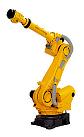
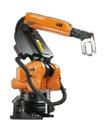
Fanuc Paint Mate 200iA - Dispensing, Painting Automation.
R30iA Controller
Fanuc Paint Mate 200iA/5L - Dispensing, Painting, Coating Automation.
R-30iA Controller
Fanuc P-10, Fanuc P10 � Door Opener, Painting Automation.
Fanuc P-15, Fanuc P15 � Hood/Deck Opener, Painting Automation.
Fanuc P-50, Fanuc P50, Fanuc P-50i, Fanuc
P50i - Bonding, Sealing. Painting Automation. RJ3 Controller
Fanuc P-50iA, Fanuc P50iA, Fanuc P-50
iA - Dispensing, Painting, Coating Automation. RJ3iB Controller
Fanuc P-100, Fanuc P100 - Dispensing, Painting, Coat Automation.
RJ Controller or RJ2 Controller
Fanuc P-120, Fanuc P120 � Material Handling.
R-J2 Controller or R-J3 Controller
Fanuc P-145, Fanuc P145 - Dispensing, Painting Automation. RJ2 Controller, RJ3 Controller, or
R-J3iB Controller
Fanuc P-155, Fanuc P155 - Bonding, Sealing, Dispensing, Painting Automation.
R-J Controller or RJ2 Controller
Fanuc P-200, Fanuc P200 - Bonder, Sealer. RJ2 Controller or RJ3 Controller
Fanuc P-200E, Fanuc P200E - Dispensing, Painting Automation. RJ3iB Controller
Fanuc P-200T, Fanuc P200T - Bonder, Sealer,
Cleanroom, Dispensing. RJ2 Controller or RJ3 Controller
Fanuc P-250iA, Fanuc P250iA, P250 -
Cleanroom, Dispensing, Paint Automation. RJ3iC Controller
Fanuc P-250iA/10S, Fanuc P250iA/10S - Dispensing, Paint Automation. RJ3iC Controller
Fanuc P-250iA/15, Fanuc P250iA/15 - Bonding, Sealing, Dispensing, Paint Automation. RJ3iC Controller
Fanuc P-250iA/15T, Fanuc P250iA/15T - Bonder, Sealer, Dispensing, Paint Automation. RJ3iA Controller
Fanuc P-500, Fanuc P500, P-500iA, P500iA - Paint Automation. RJ3iB Controller
AccuFlow,
AccuChop, AccuAir, AccuStat, Integral Pump Control ICP, ServoBell
and SpeedDock.PaintTool, PaintPRO, RoboGuide, PaintWorks, WinTPE.
ABB Tralfa TR-5000,
ME5002,
ME-502,
TR5000,
5002,
ME502 - Paint Robot. C5.3
Controller or C5.3B Controller.
ABB IRB 540, ABB IRB540, ABB IRB 540-12, ABB
IRB540-12 - Paint Robot. S4P, S4P Plus, or IRC5P
Controller.
ABB IRB 580, ABB IRB580 - Painting Robot. S4P
Controller, S4P+ Controller, S4C, or IRC5 P Controller.
ABB IRB 52, ABB IRB52 - Painting Robot. IRC 5P
Controller.
ABB IRB 5300,
IRB5300 - Door Opener. S4C Controller.
ABB IRB 5400, ABB IRB5400 - Painting Robot. S4P, S4P+, S4C, or IRC5P
Controller.
ABB IRB 5400-02, ABB IRB5400-02, ABB IRB 5400-03,
ABB IRB5400-03 - S4P, S4P Plus, or IRC5P Controller.
ABB
IRB 5400-04, ABB IRB 5400-04, ABB IRB 5400-12, ABB
IRB5400-12 - S4P, S4P Plus, or IRC5P Controller.
ABB
IRB 5400-22, ABB IRB5400-22, ABB IRB 5400-24, ABB
IRB5400-24 - S4P, S4P Plus, or IRC5P Controller.
ABB IRB 5402, ABB IRB5402 - Paint Robot. S4P or S4P Plus
Controller.
ABB IRB 5403, ABB IRB5403 - Paint Robot. S4P or S4P Plus
Controller.
ABB IRB 5500, ABB IRB5500 � Paint Robot. IRC5P
Controller.
RAPID,
RobView, Integrated Process System IPS, RobotStudio, simulation.
Sames
TRP 500,
TRP500, TRP-501, TRP501, TRP-502, TRP502, TRP-DP,
TRPDP,
single and dual head/purge spray gun, PPH 707 SB
bell, EC 35, EC 50, EX 65 Hi-TE, Range 7
Fiber Optic Bell Speed Control, BSC 100, BSC100, BSC 605, GN
3002 (GN3002) GN 4002 (GN4002), GN 5002
(GN5002), PPH707 test stand, etc.
EFC
ES19NE, FS40R, EFC Mini Gun, EFC 100, UP
200 High Voltage Power Supply, etc.
ITW
Ransburg RMA 202, RMA 303 Direct Charge Rotary Atomizer, RMA202, RMA303
Indirect Charge, Aerobell 33, Aerobell33, Evolver, Evolver SE, AGMD, REA 90,
REA90, REA 900A, REA 9000W, AquaBlock, AquaTank, TurboDisk, AdaptaFlow,
DynaFlow, RCS Gear Pump, RansFlow, PulseTrack, Etc.
Graco ProMix, Pro Mix 2KS, 3KS, 2KE, PrecisionMix, PMix, P-Mix, Precision Mix II.
Control
Platforms Allen Bradley PLC-3, PLC-5, SLC-500, PLC3, PLC5, SLC500,
MicroLogix
1000-1100-1200-140-1500, CompactLogix 1768/1769, Controllogix
5000/1756, Schneider Modicon Quantum, Modicon Premium, Modicon
M340, Momentum, Mitsubishi L Series MELSEC L, Q Sereis, Siemans
SIMATIC S7 200-300-400-1200, Siemans LOGO, AutomationDirect
Productivity3000, DirectLogic, CLICK, AC500, AC 500, OMRON
NSJ-CJ2-CS1-C200HX-C200HG-C200HE-CS-CJ1-CJ1G-CP1-CVM1/CV, TCP/IP,
Ethernet IP, Data Highway, DeviceNet, ControlNet, Profibus, Modbus,
CC-Link, Genius, Remote IO, WonderWare, Visual Basic, C++, RS
Logix, RS View, FactoryTalk, ConCept, ProWorx 32, ProWorx32, etc.
|
|
|