|
Since 2008, our customers have created over a thousand jobs
through improved paint finishing, opened new facilities, expanded existing
ones, and brought hundreds of millions in production
to the USA.
Improved paint finishing operations have added greater
than a billion dollar value to their businesses. The average
NAPaint project ROI is less than 5 months. Annual
benefit can exceed tens of millions. |
|
Production
Paint Application System Specification, Design, and Engineering
At
minimum, a production line paint application system must meet
three objectives: to support scheduled production, to produce an
acceptable quality of finish, and to conform to all safety and
regulatory requirements. With the multitude of equipment and
technologies available, which combination is most profitable for
your business?
The
penalty for specifying and engineering an inefficient paint application process is
severe for any business and is a price that is paid every day during the
lifetime of the system. For even mid-sized systems, it can easily run into the millions
of dollars each year. Poor
layout and design can result in high reject rates, costly
scrap, and significantly increased costs of labor and
material. Quality issues can easily strain existing customer
relationships and discourage new accounts. Use of any but the most efficient application
technology will often result in the need for additional
applicators and equipment, larger booths, and much more pollution and
waste. Among existing industrial manufacturing paint application
systems in operation, our experience is that poorly specified and executed
systems are the major majority. We regularly encounter facilities
that expend double or triple the total annual operational costs
that are necessary to meet the three objectives above.
Some
examples of design inefficiencies we regularly encounter are:
-
Less
than optimal methods of paint application requiring more
equipment, booth, and material usage.
-
Inadequate
or inefficient integration.
-
Poor
part rack design.
-
Inefficient
robot programming.
-
Inefficient
special colors paint supply pumping and piping arrangements.
-
Prolonged
color changes that require larger gaps on the conveyor without
parts and higher levels of material usage.
-
Lack
of paint application process control resulting in
inconsistency, higher levels of material usage, low finish
quality, higher finish
defects and reject rates, double processing and scrap.
-
Inadequate
clean room environment for painted parts in the wet.
-
Inefficient
conveyor utilization and part presentation.
-
Inefficient
or non-existent degrade modes and methods.
-
Labor
intensive operations.
-
Inefficient
methods of repair and rework.
Finally,
when you also consider that an efficient paint application system
usually incurs the lowest installation costs, an owners interests
would be well served to give
careful consideration to the design and specification of your
paint process.
Sometimes,
robot manufacturers, paint application equipment manufacturers, or
paint suppliers will propose or engineer a design or a specification for your
paint process. These proposals often favor the suppliers and
their affiliates and seldom include the most efficient paint
process arrangement available. Often, operational costs are
not seriously considered (at one major automotive manufacturer,
improved color change efficiency saved US$ 26 million annually,
more than the original cost of the paint application
equipment!). In these circumstances, and
prior to the outlay of your major capital funding for the
installation of a proposed paint application system and your
unretractable commitment for recurring yearly cost of operations,
would it not be wise to commission an unbiased and comprehensive process
review? This is especially more so if it could be undertaken
by a company specializing in paint application optimization that
is independent of equipment and paint suppliers. Such an
assessment by the North American Paint Application Company will be the best investment your business ever makes in
paint.
If
your business requires efficiency, we encourage you to contact
us with
regard to your paint application system wants and needs. We
excel at producing and defining paint application designs and
specifications for most types of electrostatic and conventional
systems that are the most efficient available. We also
provide paint application related consultant and consulting
services. We
incorporate the following into complete or partial specifications.
-
Process
validation with the most efficient technology available.
-
Minimized
installation costs.
-
Implement
efficient, beneficial, and compatible paintshop practices.
-
Minimized
operating costs.
-
Simplified
operation, maintenance, and troubleshooting.
-
Conformity
to standards and codes.
-
Regulatory
compliance.
Process
Validation
Paint
application system specifications should begin by determining the
most efficient and cost effective technology available that will
finish your parts with an acceptable level of coating performance
and quality. For most
industrial applications, the paint and application technology is
already widely applied, and this experience allows us to quickly recommend the most efficient application technology based on the
shape and material of the parts to be painted, paint chemistry,
production rates and constraints, and the requirements of the
finish. We also support owners with validation
testing using the most efficient application technology, actual
parts and coating material, and simulations of actual production as
closely as possible.
Complete
Design and Specification
Once
an acceptable level of coating performance
and quality has been obtained with the most efficient technology,
the remainder of the system can be designed and specified based on
production requirements. This includes hazard
classifications, two-tone, masking, or prep zone sizing
and specification (if any), touch-up and reinforcement zone sizing and specification (if any), primary paint
application zone(s) sizing, design, and specification, flash zone
sizing and specification, booth air flow and quality
specification, and all supporting system sizing and specification
including conveying system, part hanger and carrier configuration,
paint supply system, compressed air and breathable air (if any)
systems, waste collection, fire alarm, detection, and protection
systems, and process control systems for the foregoing, including
all utility requirements.
Feel
free to give
me a call to discuss . . . Joe @ (708) 980-3758.
Some Platforms Supported
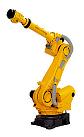
Fanuc Paint Mate 200iA - Dispensing, Painting Automation.
R30iA Controller
Fanuc Paint Mate 200iA/5L - Dispensing, Painting, Coating Automation.
R-30iA Controller
Fanuc P-10, Fanuc P10 � Door Opener, Painting Automation.
Fanuc P-15, Fanuc P15 � Hood/Deck Opener, Painting Automation.
Fanuc P-50, Fanuc P50, Fanuc P-50i, Fanuc
P50i - Bonding, Sealing. Painting Automation. RJ3 Controller
Fanuc P-50iA, Fanuc P50iA, Fanuc P-50
iA - Dispensing, Painting, Coating Automation. RJ3iB Controller
Fanuc P-100, Fanuc P100 - Dispensing, Painting, Coat Automation.
RJ Controller or RJ2 Controller
Fanuc P-120, Fanuc P120 � Material Handling.
R-J2 Controller or R-J3 Controller
Fanuc P-145, Fanuc P145 - Dispensing, Painting Automation. RJ2 Controller, RJ3 Controller, or
R-J3iB Controller
Fanuc P-155, Fanuc P155 - Bonding, Sealing, Dispensing, Painting Automation.
R-J Controller or RJ2 Controller
Fanuc P-200, Fanuc P200 - Bonder, Sealer. RJ2 Controller or RJ3 Controller
Fanuc P-200E, Fanuc P200E - Dispensing, Painting Automation. RJ3iB Controller
Fanuc P-200T, Fanuc P200T - Bonder, Sealer,
Cleanroom, Dispensing. RJ2 Controller or RJ3 Controller
Fanuc P-250iA, Fanuc P250iA, P250 -
Cleanroom, Dispensing, Paint Automation. RJ3iC Controller
Fanuc P-250iA/10S, Fanuc P250iA/10S - Dispensing, Paint Automation. RJ3iC Controller
Fanuc P-250iA/15, Fanuc P250iA/15 - Bonding, Sealing, Dispensing, Paint Automation. RJ3iC Controller
Fanuc P-250iA/15T, Fanuc P250iA/15T - Bonder, Sealer, Dispensing, Paint Automation. RJ3iA Controller
Fanuc P-500, Fanuc P500, P-500iA, P500iA - Paint Automation. RJ3iB Controller
AccuFlow,
AccuChop, AccuAir, AccuStat, Integral Pump Control ICP, ServoBell
and SpeedDock.PaintTool, PaintPRO, RoboGuide, PaintWorks, WinTPE.
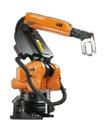
ABB Tralfa TR-5000,
ME5002,
ME-502,
TR5000,
5002,
ME502 - Paint Robot. C5.3
Controller or C5.3B Controller.
ABB IRB 540, ABB IRB540, ABB IRB 540-12, ABB
IRB540-12 - Paint Robot. S4P, S4P Plus, or IRC5P
Controller.
ABB IRB 580, ABB IRB580 - Painting Robot. S4P
Controller, S4P+ Controller, S4C, or IRC5 P Controller.
ABB IRB 52, ABB IRB52 - Painting Robot. IRC 5P
Controller.
ABB IRB 5300,
IRB5300 - Door Opener. S4C Controller.
ABB IRB 5400, ABB IRB5400 - Painting Robot. S4P, S4P+, S4C, or IRC5P
Controller.
ABB IRB 5400-02, ABB IRB5400-02, ABB IRB 5400-03,
ABB IRB5400-03 - S4P, S4P Plus, or IRC5P Controller.
ABB
IRB 5400-04, ABB IRB 5400-04, ABB IRB 5400-12, ABB
IRB5400-12 - S4P, S4P Plus, or IRC5P Controller.
ABB
IRB 5400-22, ABB IRB5400-22, ABB IRB 5400-24, ABB
IRB5400-24 - S4P, S4P Plus, or IRC5P Controller.
ABB IRB 5402, ABB IRB5402 - Paint Robot. S4P or S4P Plus
Controller.
ABB IRB 5403, ABB IRB5403 - Paint Robot. S4P or S4P Plus
Controller.
ABB IRB 5500, ABB IRB5500 � Paint Robot. IRC5P
Controller.
RAPID,
RobView, Integrated Process System IPS, RobotStudio, simulation.
Sames
TRP 500,
TRP500, TRP-501, TRP501, TRP-502, TRP502, TRP-DP,
TRPDP,
single and dual head/purge spray gun, PPH 707 SB
bell, EC 35, EC 50, EX 65 Hi-TE, Range 7
Fiber Optic Bell Speed Control, BSC 100, BSC100, BSC 605, GN
3002 (GN3002) GN 4002 (GN4002), GN 5002
(GN5002), PPH707 test stand, etc.
EFC
ES19NE, FS40R, EFC Mini Gun, EFC 100, UP
200 High Voltage Power Supply, etc.
ITW
Ransburg RMA 202, RMA 303 Direct Charge Rotary Atomizer, RMA202, RMA303
Indirect Charge, Aerobell 33, Aerobell33, Evolver, Evolver SE, AGMD, REA 90,
REA90, REA 900A, REA 9000W, AquaBlock, AquaTank, TurboDisk, AdaptaFlow,
DynaFlow, RCS Gear Pump, RansFlow, PulseTrack, Etc.
Graco ProMix, Pro Mix 2KS, 3KS, 2KE, PrecisionMix, PMix, P-Mix, Precision Mix II.
Control
Platforms Allen Bradley PLC-3, PLC-5, SLC-500, PLC3, PLC5, SLC500,
MicroLogix
1000-1100-1200-140-1500, CompactLogix 1768/1769, Controllogix
5000/1756, Schneider Modicon Quantum, Modicon Premium, Modicon
M340, Momentum, Mitsubishi L Series MELSEC L, Q Sereis, Siemans
SIMATIC S7 200-300-400-1200, Siemans LOGO, AutomationDirect
Productivity3000, DirectLogic, CLICK, AC500, AC 500, OMRON
NSJ-CJ2-CS1-C200HX-C200HG-C200HE-CS-CJ1-CJ1G-CP1-CVM1/CV, TCP/IP,
Ethernet IP, Data Highway, DeviceNet, ControlNet, Profibus, Modbus,
CC-Link, Genius, Remote IO, WonderWare, Visual Basic, C++, RS
Logix, RS View, FactoryTalk, ConCept, ProWorx 32, ProWorx32, etc.
|
|
|