|
Since 2008, our customers have created over a thousand jobs
through improved paint finishing, opened new facilities, expanded existing
ones, and brought hundreds of millions in production
to the USA.
Improved paint finishing operations have added greater
than a billion dollar value to their businesses. The average
NAPaint project ROI is less than 5 months. Annual
benefit can exceed tens of millions. |
|
Paint
Supply and Distribution Systems
The
operational efficiency of paint application systems and the level
of product finish quality achievable in any process are strongly impacted by the
paint supply and distribution system.
-
Paint
supply conditions at the applicator strongly impact the level and uniformity of
paint atomization. This affects finish quality and
consistency in every way.
-
Paint
flow control systems strongly impact the dynamic and steady-state
fluid delivery. This affects atomization, overspray, material
usage, and quality across the part.
-
In the booth, paint supply conditions strongly
impact levels of paint overspray and cleanliness.
Paint supply conditions
can and do contribute directly to poor finish quality on the final
product, creating or exacerbating orange
peel, low gloss, color mismatch, dark or uneven metallic effects,
and non-uniform film build. Paint supply conditions can and
do contribute to increased levels of booth overspray,
contamination and related dirt, and decreasing paint transfer
efficiency. Because of this, if the performance of the paint supply system is
not compatible with the application process, your business will
incur increased costs associated with operation, quality, rework,
and scrap, and these issues may very well begin to weigh heavily
with your
customers.
A
paint supply and distribution system must provide paint to the
applicator in accord with process requirements. Depending on
the application, the general criteria can include,
-
To
supply paint at a steady and controllable rate, free of
pulsations and fluctuations, and responsive to the dynamic
system demands.
-
To
supply paint per the manufacturers recommendations for
application temperature, viscosity, and other mechanical and
chemical properties including mixing and solid suspension.
-
To
protect the paint from moisture, oil, corrosion, dirt, and
other forms of contamination.
-
To
provide a continuous and maintainable supply to meet
production needs with due regard to occupational health and
safety.
When
material contains metallic flakes, paint supply systems should be
designed to minimize flake degradation. Other systems
require the flexibility to supply more than one material, with
many changeovers each hour. All systems should be compatible
with the material and the application.
Some
of the various types of paint supply systems are discussed below
and in Flexible
Color Paint Supply Systems. You are welcome to
contact
us should you feel we can help you design or
install a new paint supply system, or evaluate, modify, or upgrade
your existing system.
Oil
Free Paint Supply Systems
Historically,
all paint supply systems have used oil for lubrication of system
components, especially for pumps, agitators, and other air motors
used in the paint kitchen. Frequently, the supply of
compressed air to the paint kitchen and paint processes contains
oil or oil vapor. Oil in paint processes is a significant
potential source of contamination and defects in the paint finish.
Today,
paint process components are available that do not require
external sources of lubricating oil. The use of these
specialized components allow paint kitchens and paint storage
areas to be oil free, eliminating this substantial source for oil
contamination.
Dead
Head Paint Supply Systems
When
material does not require continuous mixing beyond its place of
storage, it can be supplied
direct from the pump with a single or branched feed terminating at the point
of use. Many clear coats and catalysts are supplied in this
way.
Such
systems should achieve a level of performance to efficiently
support paint application process requirements. We can help
you design and specify the most efficient and the most economical
deadhead paint supply system available.
Recirculating
Paint Supply Systems
When
material does require continuous mixing beyond its place of
storage, it can be supplied direct from the pump to the point
of use, or to one or more color selection valves, and then loop
back to the point of supply, continuously recirculating within
this circuit. Many paints that contain solids or are
otherwise prone to separation of ingredients are supplied in this
way.
Such
systems should achieve a level of performance to efficiently
support paint application process requirements. We can help
you design and specify the most efficient and the most economical
recirculated paint supply system available.
Reducing
Paint Sheer
Some
paints, and especially those with metallic content, physically
degrade when exposed to continuous mechanical forces of a
recirculated paint supply. This happens in metallic paint,
for example, when the flakes become deformed and damaged by high
sheer, by collisions with pipe or other system components, or as a
result of pumping action.
There
are many ways to increase the lifetime of this category of
coatings and we can help you design and specify the most efficient
and the most economical methods for achieving this.
System
Evaluation
We
will gladly discuss with your business the benefit of efficient
paint supply systems. Efficient and effective implementation
of these systems require a special knowledge paint processes.
We
can recommend modifications to existing systems or design new
installation. We can provide designs for your use or we can
offer turn-key services. We promote a paint
system audit for a
comprehensive assessment of paint system operational efficiency.
This audit can focus on efficient methods for paint reclamation
but often identifies other areas where significant efficiency can
be realized.
This
service offers enormous potential value to North American
businesses and their communities. We also recognize that a
healthy, efficient paint shop is good for your business and ours,
and therefore make every effort to keep audit costs low.
If
you value such an audit, contact
us. For even small paint shops, payback for
our audits are generally measured in hours or days. While on
site, we can also document as-built system installation and
provide for a very reasonable fee, quick turn-a-round on as-built
pneumatic, affluent, or electrical drawings and flow schematics.
Feel
free to give
me a call to discuss . . . Joe @ (708) 980-3758.
Some Platforms Supported
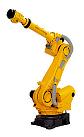
Fanuc Paint Mate 200iA - Dispensing, Painting Automation.
R30iA Controller
Fanuc Paint Mate 200iA/5L - Dispensing, Painting, Coating Automation.
R-30iA Controller
Fanuc P-10, Fanuc P10 � Door Opener, Painting Automation.
Fanuc P-15, Fanuc P15 � Hood/Deck Opener, Painting Automation.
Fanuc P-50, Fanuc P50, Fanuc P-50i, Fanuc
P50i - Bonding, Sealing. Painting Automation. RJ3 Controller
Fanuc P-50iA, Fanuc P50iA, Fanuc P-50
iA - Dispensing, Painting, Coating Automation. RJ3iB Controller
Fanuc P-100, Fanuc P100 - Dispensing, Painting, Coat Automation.
RJ Controller or RJ2 Controller
Fanuc P-120, Fanuc P120 � Material Handling.
R-J2 Controller or R-J3 Controller
Fanuc P-145, Fanuc P145 - Dispensing, Painting Automation. RJ2 Controller, RJ3 Controller, or
R-J3iB Controller
Fanuc P-155, Fanuc P155 - Bonding, Sealing, Dispensing, Painting Automation.
R-J Controller or RJ2 Controller
Fanuc P-200, Fanuc P200 - Bonder, Sealer. RJ2 Controller or RJ3 Controller
Fanuc P-200E, Fanuc P200E - Dispensing, Painting Automation. RJ3iB Controller
Fanuc P-200T, Fanuc P200T - Bonder, Sealer,
Cleanroom, Dispensing. RJ2 Controller or RJ3 Controller
Fanuc P-250iA, Fanuc P250iA, P250 -
Cleanroom, Dispensing, Paint Automation. RJ3iC Controller
Fanuc P-250iA/10S, Fanuc P250iA/10S - Dispensing, Paint Automation. RJ3iC Controller
Fanuc P-250iA/15, Fanuc P250iA/15 - Bonding, Sealing, Dispensing, Paint Automation. RJ3iC Controller
Fanuc P-250iA/15T, Fanuc P250iA/15T - Bonder, Sealer, Dispensing, Paint Automation. RJ3iA Controller
Fanuc P-500, Fanuc P500, P-500iA, P500iA - Paint Automation. RJ3iB Controller
AccuFlow,
AccuChop, AccuAir, AccuStat, Integral Pump Control ICP, ServoBell
and SpeedDock.PaintTool, PaintPRO, RoboGuide, PaintWorks, WinTPE.
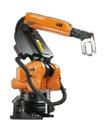
ABB Tralfa TR-5000,
ME5002,
ME-502,
TR5000,
5002,
ME502 - Paint Robot. C5.3
Controller or C5.3B Controller.
ABB IRB 540, ABB IRB540, ABB IRB 540-12, ABB
IRB540-12 - Paint Robot. S4P, S4P Plus, or IRC5P
Controller.
ABB IRB 580, ABB IRB580 - Painting Robot. S4P
Controller, S4P+ Controller, S4C, or IRC5 P Controller.
ABB IRB 52, ABB IRB52 - Painting Robot. IRC 5P
Controller.
ABB IRB 5300,
IRB5300 - Door Opener. S4C Controller.
ABB IRB 5400, ABB IRB5400 - Painting Robot. S4P, S4P+, S4C, or IRC5P
Controller.
ABB IRB 5400-02, ABB IRB5400-02, ABB IRB 5400-03,
ABB IRB5400-03 - S4P, S4P Plus, or IRC5P Controller.
ABB
IRB 5400-04, ABB IRB 5400-04, ABB IRB 5400-12, ABB
IRB5400-12 - S4P, S4P Plus, or IRC5P Controller.
ABB
IRB 5400-22, ABB IRB5400-22, ABB IRB 5400-24, ABB
IRB5400-24 - S4P, S4P Plus, or IRC5P Controller.
ABB IRB 5402, ABB IRB5402 - Paint Robot. S4P or S4P Plus
Controller.
ABB IRB 5403, ABB IRB5403 - Paint Robot. S4P or S4P Plus
Controller.
ABB IRB 5500, ABB IRB5500 � Paint Robot. IRC5P
Controller.
RAPID,
RobView, Integrated Process System IPS, RobotStudio, simulation.
Sames
TRP 500,
TRP500, TRP-501, TRP501, TRP-502, TRP502, TRP-DP,
TRPDP,
single and dual head/purge spray gun, PPH 707 SB
bell, EC 35, EC 50, EX 65 Hi-TE, Range 7
Fiber Optic Bell Speed Control, BSC 100, BSC100, BSC 605, GN
3002 (GN3002) GN 4002 (GN4002), GN 5002
(GN5002), PPH707 test stand, etc.
EFC
ES19NE, FS40R, EFC Mini Gun, EFC 100, UP
200 High Voltage Power Supply, etc.
ITW
Ransburg RMA 202, RMA 303 Direct Charge Rotary Atomizer, RMA202, RMA303
Indirect Charge, Aerobell 33, Aerobell33, Evolver, Evolver SE, AGMD, REA 90,
REA90, REA 900A, REA 9000W, AquaBlock, AquaTank, TurboDisk, AdaptaFlow,
DynaFlow, RCS Gear Pump, RansFlow, PulseTrack, Etc.
Graco ProMix, Pro Mix 2KS, 3KS, 2KE, PrecisionMix, PMix, P-Mix, Precision Mix II.
Control
Platforms Allen Bradley PLC-3, PLC-5, SLC-500, PLC3, PLC5, SLC500,
MicroLogix
1000-1100-1200-140-1500, CompactLogix 1768/1769, Controllogix
5000/1756, Schneider Modicon Quantum, Modicon Premium, Modicon
M340, Momentum, Mitsubishi L Series MELSEC L, Q Sereis, Siemans
SIMATIC S7 200-300-400-1200, Siemans LOGO, AutomationDirect
Productivity3000, DirectLogic, CLICK, AC500, AC 500, OMRON
NSJ-CJ2-CS1-C200HX-C200HG-C200HE-CS-CJ1-CJ1G-CP1-CVM1/CV, TCP/IP,
Ethernet IP, Data Highway, DeviceNet, ControlNet, Profibus, Modbus,
CC-Link, Genius, Remote IO, WonderWare, Visual Basic, C++, RS
Logix, RS View, FactoryTalk, ConCept, ProWorx 32, ProWorx32, etc.
|
|
|